 By
By
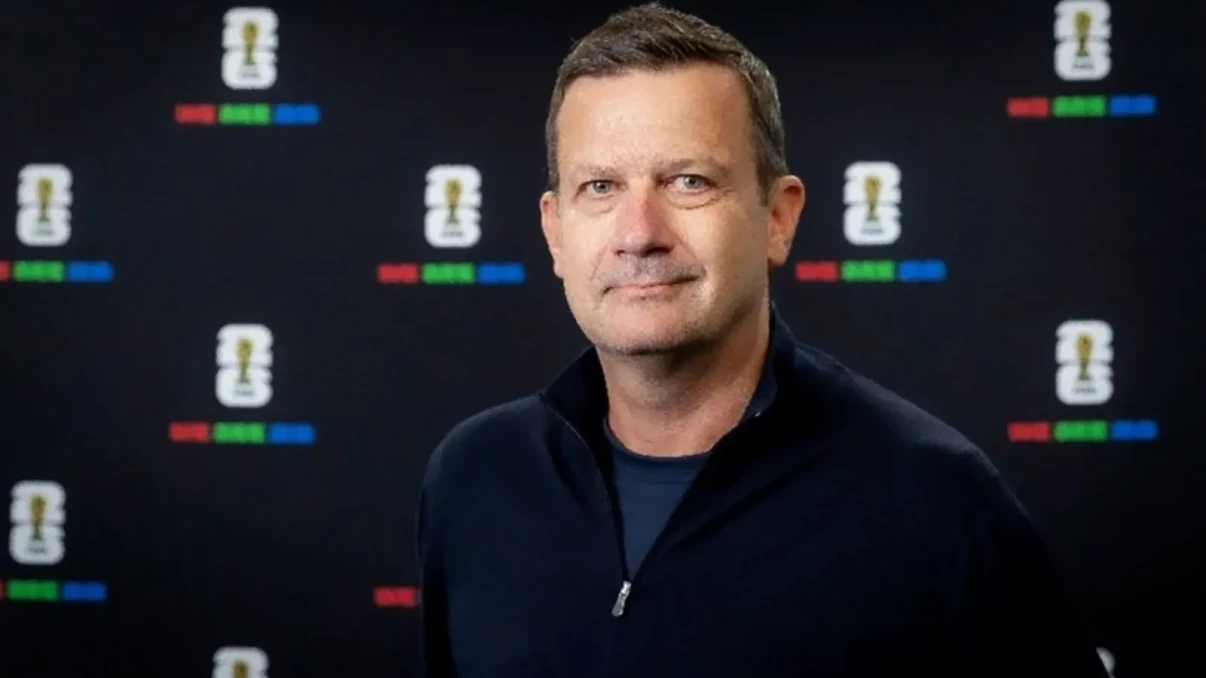
FIFA World Cup 2026 Chief Operating Officer Heimo Schirgi has revealed how football's governing body plans to manage the biggest tournament in the sport's history from a single centralised operations hub in Miami.
This year’s showpiece, which kicks off on 11 June, will be the first to feature 48 teams and will be hosted across the United States, Mexico and Canada.
The Miami-based Tournament Operations Centre (TOC) will oversee activities across all 16 host cities and more than 500 official tournament sites.
Schirgi described the facility as the "heart and brains" of the World Cup, with FIFA using it to coordinate key areas such as team travel, training schedules, stadium operations and logistics throughout the month-long event.
"So the Tournament Operations Center is really, you know, the heart and the brains of the whole operation. As you know, we have 16 cities, we have over 500 official sites with 5,000 FIFA staff working, freelancers, fixed staff, FIFA Zurich, FIFA 26 staff, everybody being deployed to the cities," said Schirgi
"So it's a very decentralised execution of the tournament, but we need a central management because we need to keep consistency across all the sites so that the team traveling from one stadium to the other has exactly the same experience, the same access control mechanism, the same transport, so everything is seamless."
"And when something changes, for example, there is a weather delay, a flight gets delayed, a flight gets cancelled, that has a huge knock-on effect on other functional areas because then the ground transport is delayed, the training sessions will be delayed."
"So to be able to coordinate, you know, that abundance of information, we have the Tournament Operations Center where all the functions are sitting together and can easily, you know, on a point-to-point have those discussions and make those adjustments as we go along."
FIFA president Gianni Infantino visited the centre this week and Schirgi highlighted some key areas that were addressed during the site inspection.
"So what we did here at the talk is, together with our colleagues at Lenovo, who've been instrumental in bringing this to life, we have created information systems that pull data from all sorts of sources. You know, every functional area has their own databases, their own systems,and in the past they were not automatically connected, right? We had to do that manually, and now all these systems are integrated into what we call the tournament cockpit."
"So it's one platform that works on a mobile phone and it works on the giant screens that we have here in the talk.
So basically all that information is consolidated and pulled together, and then we have a great visibility of what is going on across all the areas and all the venues."
Schirgi elaborated further on the decision to take this progressive and critical route for this World Cup.
The COO concluded by admitting the evidence of success will be seen in how the plan comes together once the tournament is underway.
Photo credit: MIT Sloan Sports Analytics conference


Editors Pick
 Lions U20 pay the price for mistakes against Bulls
 Neheng Khatala describes back-to-back 10km wins as special
 Thabang Mosiako successfully defends his Joburg 10km title
 Pitso Dladla laments blunt Golden Arrows attack as winless run continues
 Milford FC coach hails Stallions' clinical edge in another KZN derby win