 By
By
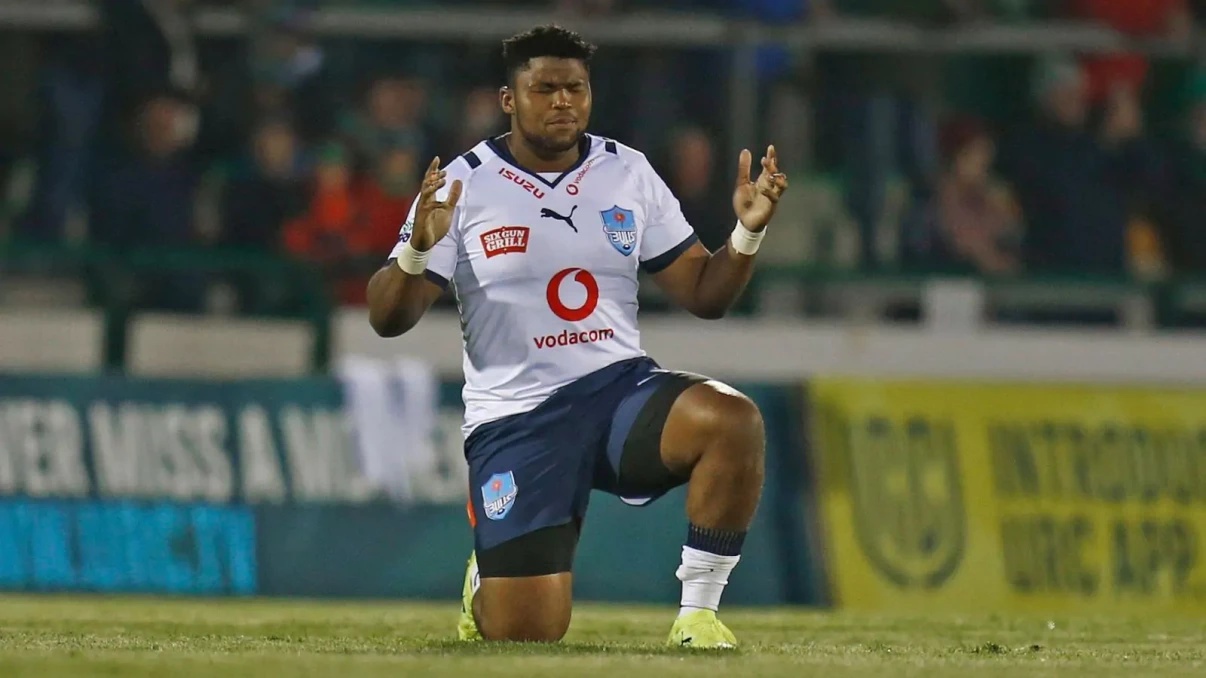
After 14-years of service, Bulls and Springbok prop Lizo Gqoboka has played his last game of rugby as he confirmed his retirement on Friday.
The Bulls forward, capped twice by the Springboks and a veteran of well over a century of appearances in blue, walks away from the game at the age of 36, closing the book on a career that began not on a rugby field but under a tree in rural Eastern Cape.
"I think it's been long coming," he told the Bulls' website.
"Most of my early thirties and the past four years, especially, with all the injuries I was getting back-to-back, I knew it was really getting close. But I was so grateful to finish here, with the Bulls."
Fittingly, he went out on his own terms. In his final appearance, a warm-up fixture against the Falcons, Gqoboka was named man of the match, scoring two tries and winning eight scrum penalties. The following week, with no fresh injury forcing his hand, he told the union he was done.
"I just felt that it's time, you know? I knew I was always on the edge, but I just had this knowing now that it's time, at 36," he added.
"I've had a good run. I've had a really good run, and so I think my heart is just full with gratitude and contentment."
Few current players can match the distance Gqoboka has travelled. Raised in Mount Frere, he did not pick up a rugby ball in earnest until he was 19, starting out as an eighthman before eventually settling at prop. Before that, life looked very different.
"Where I come from, in the rural areas of the Eastern Cape, I was taught everything in isiXhosa, I only learned English in university," he continued.
"I mean, back home, people laugh when I say the first time I had a pizza with a topping, I was in varsity, and I didn't even know they existed."
He worked loading trucks at 15 and later at a funeral parlour at 17, jobs he still speaks about with affection rather than bitterness. "I still go there and greet some of the people who still work there. Crazy, amazing loyalty."
Even as his rugby career took shape, Gqoboka kept working, completing a business management qualification in Durban and later holding down a full-day job at a construction firm building a bridge in Pinetown, training and playing club rugby in the evenings.
"I couldn't tell you the difference between a prop and a hooker when I started," he admitted.
"I had never watched rugby before I played it. I just took the ball and ran fast because I played soccer and did athletics. I think that's why I was picked, because I didn't know what I was doing."
It was a former EP Kings connection - Robbi Kempson - who first spotted something in him and helped convince Alan Solomons to hand him his first professional contract. From there, Gqoboka built a career that took him through the Stormers, a stint at Montpellier, and finally more than a decade as a first-choice prop for the Bulls.
"You still need to work hard. You still need to be disciplined. You still need to be teachable," he said of the climb. "I had the humility to ask for help from other players, to stay behind and say, help me, how do I tackle, how do I pass? I am not a self-made man. I am a sum of the teachings of my parents, my environment, my family, my friends, my coaches."
Of all the honours, one stands above the rest. "Definitely playing for the Springboks, representing my country. I think that's the biggest one for any player."
Close behind, he says, is what it took simply to survive at a union like the Vodacom Bulls for a decade. "It takes more than just talent to stay at such a big union, where talent comes every day. To stay there for 10 years speaks of character."
Asked which opponent gave him the toughest afternoons in the scrum, Gqoboka did not hesitate. "Frans [Malherbe] was tough. He's not just big and strong, he's also technically sound, and you barely find those guys. Someone might be strong but not technically sound, or trying all the tricks but not quite there in terms of strength. With Frans, he was such an all-rounder, in terms of strength and technique."
Gqoboka is refreshingly candid about the pillars that have carried him. "It's definitely my faith, and the atmosphere at home that my wife created, the support, the prayers of my mom, my dad, and my kids."
Ministry, he says, will now move from the background of his career to its centre. He has recently completed a second degree, this time in theology, and preaching has quietly run through his entire playing career. "It's always been who I am, what I live. It's just a continuation of it. Funny enough, at the Stormers I called the guys into the physio room, shared the gospel, and five of them gave their lives to Jesus at the stadium."
Off the field, he has also built a business in earthmoving equipment, and discipline shows there too: a savings habit he started at 22, the moment he signed his first contract.
"It was about the habit and the discipline of putting away more than the amount," he said, a philosophy that allowed him to buy equipment outright rather than lean on financing. He also plans to lean further into motivational speaking, drawing on a story that, by any measure, is remarkable: a boy who first went to school under a tree in Mount Frere, who did not touch a rugby ball until he was nearly out of his teens, going on to earn two Springbok caps and build a life most would call unimaginable from where he started.
Home, for now, remains Midstream in Centurion, where he has lived for the past decade and where all his children were born, alongside a house the family has also built back in the Eastern Cape.
Beyond the numbers and the honours, those who have worked with Gqoboka point to something less measurable: a warmth that never seemed to dim, even through years of injury setbacks that would have worn down most players.
"Lizo's journey is one of the most remarkable stories in South African rugby, defined not just by his physical power on the field, but by his humility, resilience, and character off it," said Edgar Rathbone, chief executive of the Blue Bulls Company.
"To arrive at the game so late and go on to earn two Springbok caps while serving as a foundational pillar for the Vodacom Bulls for over a decade speaks volumes about the man he is. He leaves behind an inspiring legacy at Loftus Versfeld, and while we will miss his leadership and infectious warmth in the changeroom, we wish him every success in this next chapter."
It is a sentiment echoed by everyone who has crossed his path in a Bulls jersey. Even through the injuries, the frustration, the years on the physio table, Gqoboka was the one guy in the changeroom with a permanent smile, a reminder that gratitude was never in short supply.
"I'm truly grateful," he said, closing the conversation the way he seemed to close most things in his career: full of thanks, and looking ahead rather than back.
"All my kids are born here. It's home."


Editors Pick
16_144x91.webp "Proteas suffer another injury setback as Lutho Sipamla ruled out of Namibia tri-series") Proteas suffer another injury setback as Lutho Sipamla ruled out of Namibia tri-series
Proteas suffer another injury setback as Lutho Sipamla ruled out of Namibia tri-series
 Taylor Kavanagh sets her sights on the World Champs after winning Durban 10km
 Orlando Pirates make history with fifth straight MTN8 Final
 KZNA and Comrades Marathon set for crucial talks to resolve their differences
 Tashreeq Matthews reveals the secret to staying fresh in hectic schedule